

Transforming MSMEs through E-commerce
Festive Ecommerce Trends | January 2024
The festive
season stretching from Navratri to Diwali & Bhai Dhooj, during the months
of September to November, represents the peak annual business opportunity for
Micro, Small and Medium Enterprises (MSMEs) across consumer-oriented sectors in
India. With discretionary spending rising sharply, these months contribute 35-40%
of annual revenues for MSMEs in retail, consumer goods, apparel, homeware,
handicrafts among others. E-commerce entities accelerate targeted promotions
across this duration, lining up attractive deals, new product launches,
influencer engagement, contests and personalized offers to attract high intent
shoppers.
With the
onslaught of the Covid-19 Pandemic, there has been a drastic change in consumer
buying behavior & patterns in metro cities and this can be seen in the
festive season too. E-commerce platforms have witnessed tremendous growth
during festive sales, with order volumes expanding from US$ 3 billion during
the 2019 season to US$ 5.7 billion in 2022, reflecting a CAGR of 23%.
Categories like fashion, smartphones, consumer electronics and home appliances
see maximum traction. With lockdowns and social distancing measures in place,
more consumers have shifted to online shopping and become more open to
purchasing from small, local businesses.
A continued
shift in consumer and merchant behaviour, matched
with strong investor confidence, has ushered India into its 'Digital Decade'
and set the country on a path to reach a US$ 1 trillion. consumer internet
economy by 2030. Digital services are fast becoming integral to India's 700M+
internet users, which includes 350M digital payment users and 220M online
shoppers. As India undergoes a dramatic boom that will see household
consumption doubling by 2030, digital commerce will invariably become even more
entrenched in Indians' everyday experience*. E- commerce platforms have aided
small enterprises in rapidly expanding from a local customer base to a
nationwide reach.
UPI
Payments which played a pivotal role in financial inclusion also paints a very
promising picture. According to the Ministry of Finance, the total digital
payment transactions volume increased from 2,071 crore in FY 2017-18 to 13,462
crore in FY 2022-23 at a CAGR of 45%**.
Consecutively,
the Open Network for Digital Commerce (ONDC) has also emerged as a game-
changing initiative based on an open-source network aiming to democratize
e-commerce opportunities for micro, small and medium sellers in India. ONDC's
commitment to vernacular interfaces and enhanced logistics through regional
providers maximizes the ability for MSMEs to tap into rising demand from Tier
2/3 markets during seasonal high-spend cycles.
*https://www.bain.com/insights/e-conomy-india-20/23/
**https://pib.gov.in/PressReleasePage.aspx?PRID=1988370
Introduction
This,
combined with accessible digital payment methods like UPI, have made online
purchasing much easier, while simplified taxation norms, like replacing
multiple state taxes with a single GST, have reduced compliance issues for
online sellers by eliminating octroi and tax compliances set by states. Lastly,
the spread of logistical infrastructure network across the different Indian
geographies have made it possible for sellers to reach distant customers.
Planned investments of Rs 22 lakh crores, integrated road-rail connectivity,
UDAN Scheme to expand airport network and Railway Freight Corridors have made
it easy to access pin codes stretching to rural India. Growth of logistics
providers have enabled quick and reliable product deliveries. Platforms like Shiprocket, ElasticRun, and Shyplite that offer access to affordable logistics for
single truckloads have eased fulfillment costs for MSMEs inordinately
increasing sales potential. These factors have cumulatively created a vibrant
ecosystem for ecommerce and boosted online sales across India. This report
intends to show the effect of these factors & trends & how the
frictionless payments, streamlined logistics and favorable policies have shaped
the emerging market dynamics from the point of view of the MSMEs who have tried
to align themselves with the Post Covid World. India SME Forum & FIRST has
actively advocated for MSMEs to embrace digital transformation. This report
will specifically measure the impact of this digital push on MSMEs, with a
focus on those who have adopted e-commerce. Notably, there is a gap in existing
research, and this report aims to fill that void by being the first
comprehensive survey to help MSMEs measure the impact of adopting digital
practices on their businesses.
The
objective of the report is to understand the changes in consumer behavior
especially after COVID-19 that has led to an increase in online buying and with
easy accessibility to internet, we have seen customers from tier-2 and 3 cities
buying more through e-commerce. While initially the major share of online
buyers was restricted to Metros and Tier 1 & 2 cities, today, a
considerable portion also comes from the smaller towns and rural areas. Rapid
adoption beyond metro cities is powering expansion, with e-tailers revealing
that Tier 2 and 3 cities drive nearly 65% of festive revenues, under lining the
vast headroom available as small-town India goes online. This report offers a
comprehensive analysis of the state of e-commerce within the context of peak
festive shopping seasons in India and the contribution of e-commerce towards
the revenues of Micro, Small & Medium Enterprises in India.
The
multifaceted insights provided will serve as a valuable resource for diverse
stakeholders, ranging from marketplace entities to policy regulators and small
business owners. The Government of India's initiative like Digital India and
ONDC, etc., have made the e-commerce ecosystem transparent for both sellers and
buyers. The report also touched on the pain points of online MSMEs and
highlighted the problems related to government and industry
regulators/practitioners. This report aims to conduct a thorough examination of
critical business metrics, encompassing sales revenues, order volumes, sales
growth rates, pricing tiers, and target demographics. The focus is on understanding
emerging shifts in attitudes and online buying intensity from a consumer
perspective during festive sales. Furthermore, an in-depth assessment of seller
experiences and operational capacities, this includes evaluating the efficacy,
trust, and adoption levels of key e-commerce platforms.
The
Methodology
The Forum
for Internet Retailers, Sellers & Traders (FIRST) has been dedicatedly
working towards bringing the practice of adopting Digitalization to the
forefront. In this quest, FIRST has successfully approached and educated around
67,392 MSMEs across India in the last 2 years and continues to do so. These
MSMEs are the members of the India SME Forum and its constituent supporting
organizations and federations.
The survey,
conducted by the India SME Forum aims to comprehensively examine the impact of
e-commerce sales during the festive season and the increasing adoption of the
Direct-to-Consumer (D2C) approach among Micro, Small, and Medium Enterprises
(MSMEs) across India.
To ensure
precision in data collection, a thorough questionnaire was formulated through
extensive deliberation and analysis. The final questionnaire format was
designed to facilitate the gathering of specific data points, thereby
streamlining both qualitative and quantitative analysis. The 67,392 MSMEs
registered under FIRST were approached for data collection for the survey which
commenced with the distribution of survey emails in July 2023. Subsequent
reminders were sent via SMS and telephonic outreach to enhance response rates.
The initial
phase of the survey garnered a total of 34,263 responses. Among these, 32,472
responses were identified as fully complete and comprehensive. However, 1,791
respondents left the survey incomplete and were consequently excluded from
consideration for the purpose of this report. From the pool of 32,472
respondents, the study narrowed its focus to the subset of 22,073 respondents
who reported that they were already actively engaged in online selling. These
respondents were then progressed to Section 2 of the survey for more in-depth
analysis.

Highlights
of the Survey
v 67.9% of the
respondents are currently involved in online selling, while 28% plan to start
soon, highlighting widespread e-commerce participation.
v Over 50% of
sellers reported a significant increase in sales, and 41.7% experienced an 80-
100% expansion of their customer base after adopting e-commerce.
v Trust remained a
cornerstone in the e-commerce ecosystem, with wide customer reach (100%),
company reputation (99%), and a robust seller ecosystem (95%) cited as the top
three reasons driving seller trust in e-commerce websites.
v MSMEs focus on
stocking up inventory, increased advertising, new product launches, and
workforce additions as preparative strategies for the festive season.
v 14,982
respondents reported a 30-40% increase, and 1,795 experienced a boost of over
50% in festive season sales.
v Nearly 80% of
sellers generated their revenues from online and e-commerce sales, with 60%
doubling their sales and 90% registering a minimum 30% YoY increase in online
sales.
v Tier 2 & Tier
3 cities played a significant role, constituting 41.31%, followed by
metropolitan cities at 36.62%.
v Onboarding
difficulties, high returns, lack of seller support, and tax complexities emerge
as major pain points for e-commerce participants.
v Amazon India
leads with 38%, followed by significant preferences for Flipkart, Myntra, and Meesho.
v A noteworthy 57%
of respondents view e-commerce as an ideal Direct-to-Consumer (D2C) platform,
leveraging market reach and trust.
v Digital India,
Telecom and the UPI revolution are primarily responsible for sellers joining e-
commerce platforms.
v 36.37% of
respondents advocate for changes in GST guidelines to simplify compliance
processes.

Digital Transformation Underway
According
to the India Brand Equity Foundation's e-commerce industry report 2023, the
last three years have seen a rise in online shoppers by 125 million and is
expected to increase by another 80 million by 2025*. According to a report by
Deloitte India, as India moves towards becoming the third-largest consumer
market, the country's online retail market size is expected to reach US$ 325
billion by 2030, up from US$ 70 billion in 2022, owing largely to the rapid
expansion of e- commerce in tier-2 and tier-3 cities**.
The
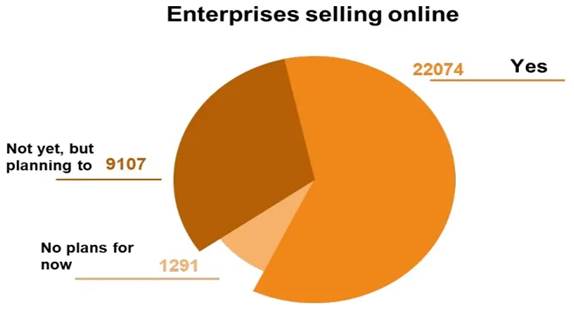
survey reported that a majority of the respondents, that is 22073 (67.98%) were
inclined towards online selling, while an additional 9108 (28.05%) of the
respondents express their intentions to venture into online sales.
Surprisingly, 1291 respondents (3.98%) indicated no plans to go online, despite
the active efforts of FIRST (Forum for Internet Retailers, Sellers &
Traders) encouraging MSMEs to establish an online presence, which suggests that
there is still a considerable amount of confusion and prevalent myths in the
market, hindering some individuals from making the transition to online
selling.
The
Open Network for Digital Commerce (ONDC) has also emerged as a game-changing
initiative based on an open-source network aiming to democratize e-commerce
opportunities for micro, small and medium sellers in India. ONDC's commitment
to vernacular interfaces and enhanced logistics through regional providers
maximizes the ability for MSMEs to tap into rising demand from Tier2/3 markets
during seasonal high-spend cycles.
*https://www.ibef.org/industry/ecommerce
**https://www2.deloitte.com/in/en/pages/about-deloitte/articles/future-of-retail-emerging-landscape-of-omni-channel-commerce-in-India.html
From Third Party or No Brands to Brand Owners
With
the surge in India's e-commerce sector, the survey underscores a growing
awareness among businesses regarding the importance of intellectual property
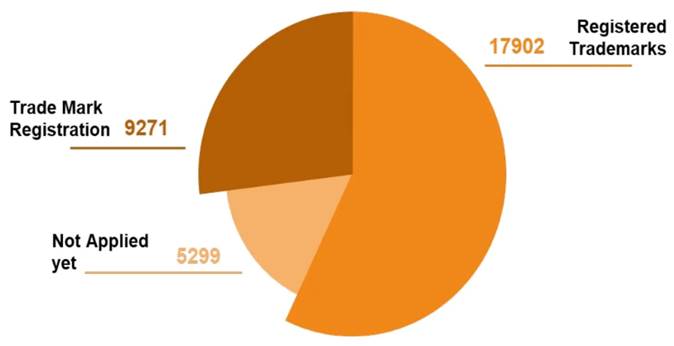
(IP), particularly trademarks. A substantial 55.13% (17902) of respondents
reveal they have already registered trademarks, with an additional 29% (9271)
currently in the process of doing so. Only 16% (5299) indicate a lack of
trademarks in their portfolio. This demonstrates that 27,173 out of 32,372
respondents are aware about the IPR and its importance in their growing
business.
The
success of these awareness efforts can be attributed to the initiatives
undertaken by the India SME Forum (ISF) & its Centre of IP Research,
Promotion and Facilitation (CIPRPF) which has played a pivotal role in
educating entrepreneurs about trademarks and their significance. This success
is underscored by the impressive 85% success rate of ISF campaigns related to
intellectual property rights (IPR).
This
trend aligns with the broader landscape of intellectual property registrations
in India, which has witnessed a remarkable upswing. According to 2022 data from
the World Intellectual Property Organization (WIPO), India ranks fifth globally
in annual trademark applications and sixth in patent filings, consistently
outpacing global averages. A report by the Organization for Economic
Cooperation and Development or the OECD talks about the rise in risks of
counterfeiting with selling products online through e-commerce platforms. Thus,
as more businesses sell their products online it becomes essential for them to
register for trademarks and protect their intellectual property**. A rise in
e-commerce retail can thus also be correlated to the rise in trademark
registrations.
*https://www.managingip.com/article/2ban50tiglik/4wtigBaskcg/expert-analysis/local-insights/india-a-statistical-analysis-of-trends-in-ip-rights
*https://www.oecd-library.org/sites/2abaae54-onv/index.html?itemid-%2Fcontent%2Fcomponent%2F2abaa054-on
D2C Gains Popularity in India
Among
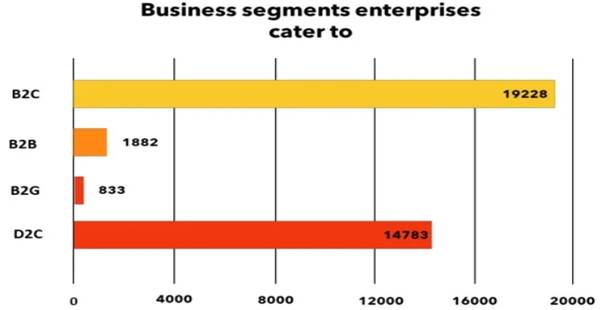
the 22,073 respondents, a significant majority-19,228 respondents are oriented
towards the B2C segment, showcasing a strong emphasis on direct consumer
engagement. Additionally, 14,783 respondents are actively involved in the D2C
segment, which has experienced heightened popularity, particularly through
e-commerce platforms, in the post-pandemic era. The India SME Forum (ISF) has
actively promoted the D2C model, leveraging success stories from the brands
like SUTA, BLUE TEA and AMRAPALI.
In
terms of other market segments, 1,882 respondents focus on B2B segment and a
smaller yet noteworthy group of 833 respondents engage in B2G segment. It's
important to note that this classification pertains specifically to respondents
who have taken their businesses online, and the numbers could be higher if
offline-mode businesses were also considered. High competition from large
established brands, limited marketing budgets and lack of bargaining power make
it tough for MSMEs to get shelf space at modern trade stores or tie ups with
major distributors. Additionally, small production volumes, inconsistent
quality and inability to offer credit terms or discounts like bigger players
which further restricts MSME retail access. MSMEs also face challenges meeting
diverse state regulations and managing logistics for widespread distribution.
As of July 2023, an impressive 65.42 lakh sellers are registered on GeM, including 8.32 lakh MSMEs. ISF has further
strengthened this initiative by signing a Memorandum of Understanding with GeM, facilitating collaboration to conduct
capacity-building workshops and training programs related to the portal. This
partnership aims to enhance the overall SME ecosystem, while also promoting key
initiatives such as Womaniya, Startup India, National
Livelihoods Mission, and more.
According
to a report by Shiprokcet, the Indian D2C market was
approx. $12 Billion in 2022 with a CAGR of 40%, which is expected to reach
around $60 Billion by 2027. India is expected to be the third largest economy
by 2030 with ~40% of the population living in urban areas; India to have 1.3
billion+ smartphone users and internet users and ~50 million online shoppers by
2030.
D2C
brands are scaling rapidly, these brands are reaching INR 100 Cr milestone in
3-5 years after launch.*
D2C
model leveraging e-commerce is gaining major traction among Indian MSMEs to
boost sales & reach new markets. MSMEs can sidestep traditional retail
channels & distributors while gaining visibility through targeted digital
marketing & enables MSMEs to easily list and sell products without heavy
inventory or warehousing costs. It provides access to millions of potential
buyers & keeps overheads low.
*India
D2C Report 2022 by Shiprocket
Omni-channel is IN
The
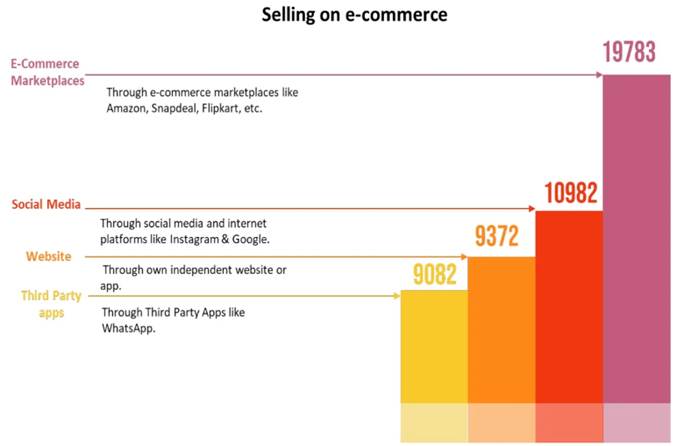
survey revealed that a majority of respondents that is 19,783 engage in selling
their products through various online channels, with a notable presence on
e-commerce platforms such as Amazon, Flipkart, and Snapdeal. Additionally,
10,982 respondents utilize social media platforms like Instagram and Google,
indicating a growing trend and among the respondents, 9,372 also mentioned
selling ontheir own websites or apps, while 9,082
opted for third-party apps like WhatsApp.
India
SME Forum (ISF) has been actively pushing for the establishment of individual
business websites instead of solely relying on e-marketplaces. This strategy is
likened to having one's own shop as opposed to operating within a mall. This
holistic and diversified approach, often referred to as an omnichannel
strategy, enables businesses to engage with customers across various platforms
and channels, thereby enhancing their reach and adaptability in the dynamic
digital landscape.
E-commerce
platforms, especially Amazon, emerged as a predominant choice for online
product sales, attributed to several advantages for businesses. These
advantages encompass a swift selling process, cost reduction, affordable
marketing, extensive reach, flexibility, and easy exportation. Initiating sales
through established marketplaces serves as a pragmatic approach for early
traction, providing a launch pad for businesses.
Selecting Platforms
In
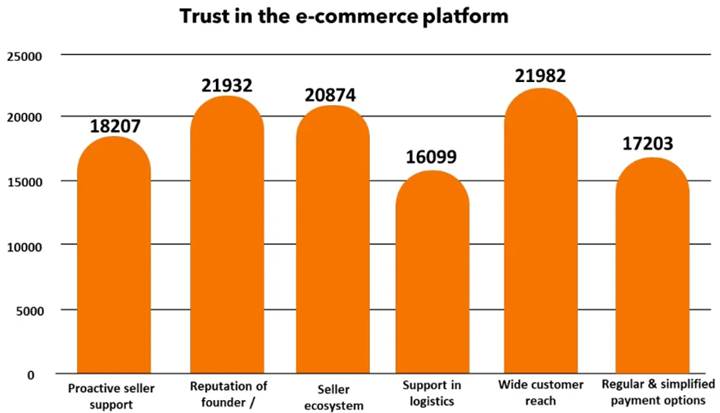
the e-commerce landscape, the survey uncovered a wishlist
of factors that are crucial for instilling trust among sellers. Nearly 99% of
respondents, totaling 21,982, expressed a strong preference for platforms with
a wide customer reach, emphasizing the significance of reaching a diverse
audience, followed by the reputation of the founder/marketplace as noted by
21,932 respondents. A robust seller ecosystem was identified as pivotal by
20,874 sellers, highlighting the importance of a collaborative and supportive
community. Proactive seller support, along with the availability of regular and
simplified payment options, and logistical assistance, rounded out the wishlist, showcasing the sellers' desire for comprehensive
and reliable support systems from e-commerce platforms.
Online Catalyzes Business Growth by 50%
More
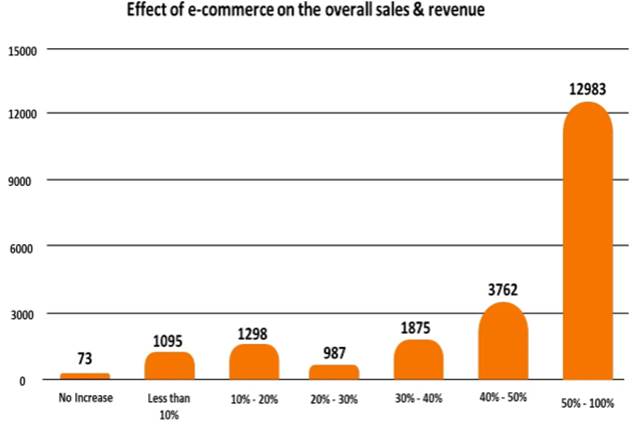
than 50% of the respondents, that is 12,983 businesses have had a substantial
boost in sales of more than 50%, with another 3,762 respondents having stated
that they have seen an increase between 40% 50%, whereas 4,160 respondents have
seen an increase between 10% 40%. The ability to tap into a worldwide audience
has proven instrumental in driving substantial sales improvements for a
considerable number of businesses and the importance of worldwide market is
evident in its capacity to offer businesses unparalleled opportunities for
expansion, diversification, and increased competitiveness in the ever-evolving
landscape of global commerce.
On
the other hand, only 1,095 respondents experienced less than a 10% sales
uptick, and a mere 73 reported no overall revenue increase.
The
advent of e-commerce giants like Amazon and Flipkart has notably elevated sales
income, particularly in the D2C sphere. Social commerce in India is poised for
exponential growth, projected to reach US$ 16-20 billion by FY25, driven by an
impressive CAGR of 55-60%.*
*https://www.ibef.org/industry/ecommerce
New Customer Acquisition Easier Online
The
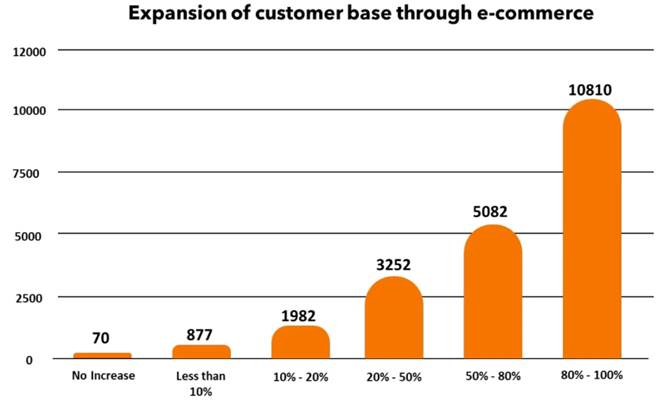
survey findings reveal a notable positive impact on customer base expansion
following the adoption of an online presence. A substantial 48.97% of
respondents, totaling 10,810 businesses, reported a remarkable increase of over
80% in their customer base. Additionally, 5,082 respondents noted a significant
growth ranging between 50% to 80%, while 5,234 businesses experienced a
customer base increase ranging from 10% to 50%. Only 877 respondents reported a
modest increase of less than 10%, highlighting the overall positive trend in
customer acquisition through online channels.
In
contrast, a mere 70 respondents expressed no increase in their customer base
despite establishing an online presence. This minority underscores the need for
targeted training and education initiatives to empower these businesses in
leveraging digital platforms effectively.
There
has also been a rise in the customer base on e-commerce platforms as was seen
through the analysis of the India Brand Equity Foundation's e-commerce industry
report 2023 which indicates that in the last three years the online shoppers
have risen by 125 million and this number is expected to further increase by
another 80 million by the year 2025*.
*https://www.ibel.org/industry/ecommerce
Online Drives Higher Sales & More Customers
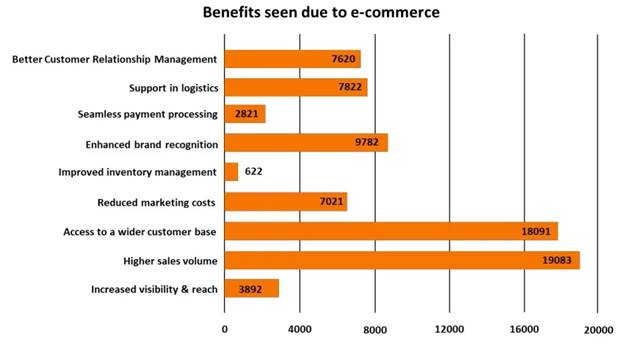
The
survey results highlight the substantial positive impact experienced by
businesses selling on e-commerce platforms, particularly in terms of increased
sales volume and access to a broader customer base with high responses at
19,083 & 18,091 respectively. The geographical liberation afforded by these
platforms stands out as a significant driver, with 7,822 responses, enabling
businesses to reach customers far beyond their local regions. Moreover, 9,782
respondents believe that venturing online has significantly improved their
brand recognition, which indicates that the exposure gained through e-commerce
platforms has played a crucial role in increasing the visibility and awareness
of their brands among consumers. Businesses are also succeeding in establishing
a more enhance customer relationship management system with 7,620 responses
being in favor of this positive impact. Another noteworthy finding is that over
7,021 respondents feel that e-commerce has led to a reduction in marketing
costs, indicating that the efficiency and reach of online platforms have
allowed businesses to achieve effective marketing results with lower expenses,
contributing to improved cost-effectiveness.
Additionally,
it is also highlighted that businesses are still facing complications in
retrieving payments and widening their brands visibility. Lastly, the
discrepancy in experience between ease of sales vs ease of post-purchase
fulfillment payments (2,821 responses) is an issue warranting action from
policy makers by way integration of payment settlement platforms and
seller-side fintech innovations to eliminate leakage between digital order
acquisition and realization cycles. The aspect of brand visibility too merits
more discourse. The lower agreement of 3,892 on actual conversions reveals gaps
in brand positioning, communication strategies once buyers land on product
pages. This indicates the scope for further education of sellers on effective
online merchandising. The lowest responses was garnered for improved inventory
management at only 622. Therefore, while validating the directional positive
impact of e-commerce adoption, the survey also flags important nuances
requiring addressing through supportive interventions for sustaining seller
success online.
Digital India & UPI Drivers of Transformation in MSMEs
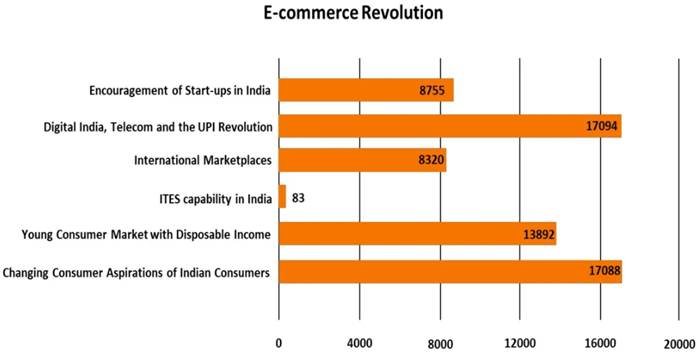
A
substantial majority of respondents, accounting for 17,094, attributed their
motivation to the transformative effects of the Digital India initiative, the
Telecom Revolution, and the widespread adoption of Unified Payments Interface
(UPI). The Digital India program, a catalyst for the escalating prominence of
e-commerce in India, has played a pivotal role in fortifying digital
infrastructure. As of February 2023, this initiative has resulted in an
impressive 1.2 billion telecom subscribers and a staggering 30 billion UPI
transactions within a five-month span, establishing a robust foundation for the
burgeoning growth of e-commerce*.
Furthermore,
a noteworthy segment of respondents, totaling 13,892, stated that they were
amused by the young consumer market with disposable income and 7,088
respondents underscored that their engagement with e-commerce platforms was
spurred by the evolving aspirations of Indian consumers. This signifies a
growing awareness among businesses of the shifting preferences and expectations
of the consumer base, prompting a strategic realignment
towards
the dynamic landscape of online commerce.
One
of the factors leading to a change in consumer aspirations is the rise in
household incomes. It is anticipated that the elites will make up at least a
third of the total consumption by 2025. This will also be coupled in an
increase in urbanization and the rise of nuclear family systems in India which
will all contribute to higher household income**.
Some
other factors that were responsible for sellers to join e-commerce platforms
includes, encouragement of startups in India, accessibility to the
international marketplace and ITES capabilities in India.
*https://www.ey.com/en_in/india-at-100/digitalizing-india-a-force-to-reckon-with
**https://www.bog.com/publications/2017/marketing-sales-globalization-new-indian-changing-consumer
Sellers Rely on Innovation to Attract More Consumers
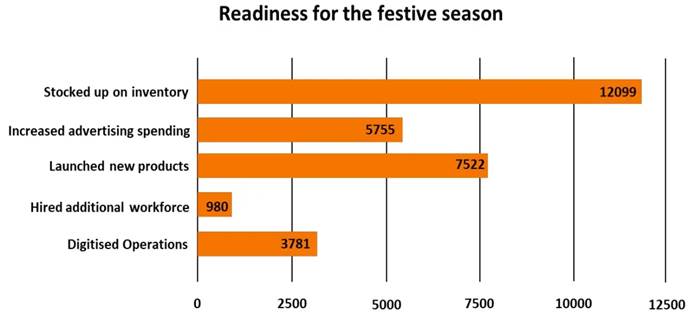
In
a comprehensive exploration of seller preparedness during the festive season,
the survey reported that the majority, comprising 12,099 respondents,
emphasized the significance of stocking up inventory as a primary measure.
Consumer spending during the festive season increases by about 12% on clothing
and about 14% on recreation, entertainment and leisure. Therefore, businesses
prepare to meet the rise in demand by increasing their stocks*.
In
addition, 7,522 respondents emphasized the strategic introduction of new
products during this specific timeframe. Acknowledging the escalated consumer
demand prevalent during festive seasons, the unveiling of new products not only
addresses this surge in demand but also establishes a competitive edge within
the dynamic market. A 2022 report released by Meta aligns with these insights,
revealing that an impressive 93 percent of consumers express a willingness to
explore new brands and products during festive periods. This observation
underscores the efficacy of product launches as a strategic approach to
fostering business growth during the festive season.
Furthermore,
businesses have undertaken additional preparedness measures to effectively
navigate the festive season. This includes a notable increase in advertising
expenditure, as launching seasonal discount programs across a range of products
serves to attract customers. Additionally, the digitalization of operations has
been implemented to enhance overall efficiency, complemented by the recruitment
of supplementary staff to adeptly manage the seasonal surge in demand. These
comprehensive strategies collectively position businesses to navigate
challenges and capitalize on the myriad opportunities presented during the
festive season.
*https://www2.deloitte.com/in/en/pages/consumer-business/articles/indian-consumers-to-spend-more-on-luxury-this-festival-season.html
Online Spurs Over 30% YoY Growth
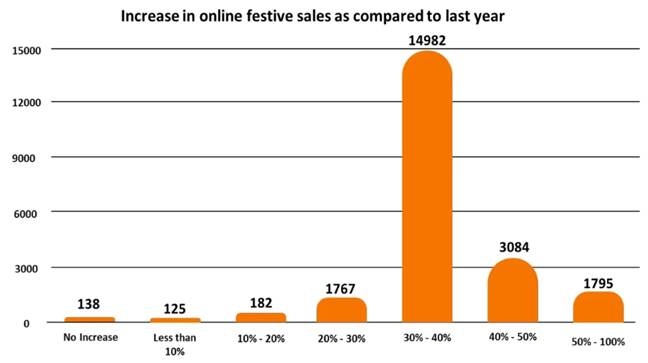
The
festive season brought a substantial surge in online sales for businesses who understood
how to harness the potential of selling online, with an impressive 14,982
respondents experiencing remarkable growth ranging from 30-40%. 4,879
respondents reported an increase in the range of 40-100%, emphasizing the
festive season's pivotal role in propelling sales figures. Additionally, 1,949
respondents experienced growth between 10%-30%, followed by a modest 125
respondents reporting a growth of less than 10%, reflecting varying degrees of
success during the festive season. Lastly, 138 respondents indicated no
increase in online sales compared to the previous year, providing a
comprehensive view of the impact on online sales across different segments.
According
to Unicommerce, E-commerce order volumes grew
handsomely this festive season, increasing by approximately 37% during the
festive season sale of 2023 as compared to the festive sale period in 2022. The
gross merchandise value (GMV) also saw an increase of 22 per cent during the
same festive period. The success of the festive season sales in parts may be
attributed to attracting discounts on the online marketplaces and robust
advertising campaigns. This has helped marketplaces record an impressive year-on-year
(YoY) order volume growth of 39%. Brand websites, on the other hand, also
reported a strong 23% increase in e-commerce order volumes*.
*https://infowordpress.s3.ap-south-1.amazonaws.com/wp-content/uploads/2023/08/14114209/India-Ecommerce-Index-2023.pdf
Over 80% MSMEs Generate More Revenues Online
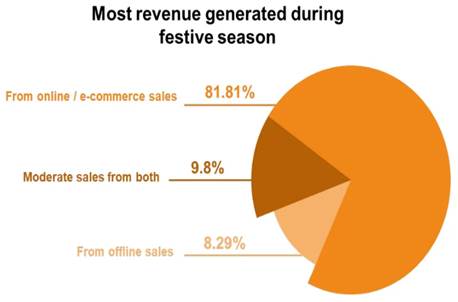 The survey reported a
dominant trend in revenue generation during the festive sales period, with a
substantial 81.81% of respondents attributing the majority of their revenue to
online and e- commerce sales. This underscores the pivotal role of digital platforms
in driving sales and revenue growth for businesses during festive seasons. The
widespread adoption of online channels is evident in the significant majority
favoring this route for revenue generation.
The survey reported a
dominant trend in revenue generation during the festive sales period, with a
substantial 81.81% of respondents attributing the majority of their revenue to
online and e- commerce sales. This underscores the pivotal role of digital platforms
in driving sales and revenue growth for businesses during festive seasons. The
widespread adoption of online channels is evident in the significant majority
favoring this route for revenue generation.
In
contrast, 9.8% of respondents reported sales from both online & offline
channels and the remaining 8.29% of the respondents noted that they received
the most revenue for their products from offline sales during the festive
season. While a minority, this group emphasizes the continued relevance of
offline sales channels for certain businesses, highlighting the importance of
maintaining a diversified sales strategy to cater to varying consumer
preferences and market dynamics.

Consumers in Tier 2, 3, 4 & Rural Areas Drive MSME Orders
Online
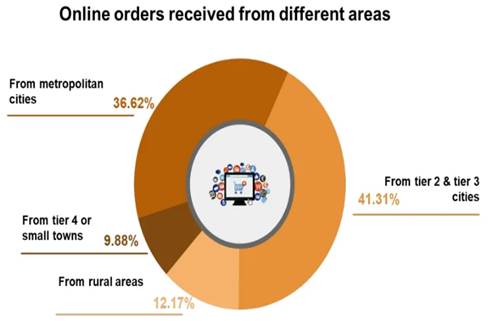 The survey's analysis of online
and e-commerce sales order traffic reveals intriguing patterns in the
geographical distribution of consumer engagement. In a significant shift, the
majority of respondents that is 41.31% identified Tier 2 and Tier 3 cities as
the primary source of their online order traffic. This trend reflects the
expanding influence and increasing online participation of consumers in smaller
urban centers. As these cities embrace e-commerce, businesses targeting these
areas are poised to benefit from the growing trend and capitalize on the
evolving consumer behavior. In major urban centers, specifically metropolitan
cities, a notable 36.62% of respondents reported the highest order traffic.
The survey's analysis of online
and e-commerce sales order traffic reveals intriguing patterns in the
geographical distribution of consumer engagement. In a significant shift, the
majority of respondents that is 41.31% identified Tier 2 and Tier 3 cities as
the primary source of their online order traffic. This trend reflects the
expanding influence and increasing online participation of consumers in smaller
urban centers. As these cities embrace e-commerce, businesses targeting these
areas are poised to benefit from the growing trend and capitalize on the
evolving consumer behavior. In major urban centers, specifically metropolitan
cities, a notable 36.62% of respondents reported the highest order traffic.
The
data also highlights the presence of online shopping in tier 4, small towns and
rural areas with 22.05% of respondents reporting the highest order traffic from
such regions. This suggests a growing acceptance of digital transactions beyond
urban boundaries, presenting businesses with opportunities to cater to
previously underserved markets.
Tier 2 & 3 Cities Drive Customer Growth
Businesses
navigating the festive season landscape must strategically balance their
engagement with existing customers and the pursuit of new customer segments,
especially in emerging urban markets. Geographically, Tier 2 and Tier 3 cities
took center stage, outpacing metros in order traffic and signaling a
significant shift in consumer behavior.
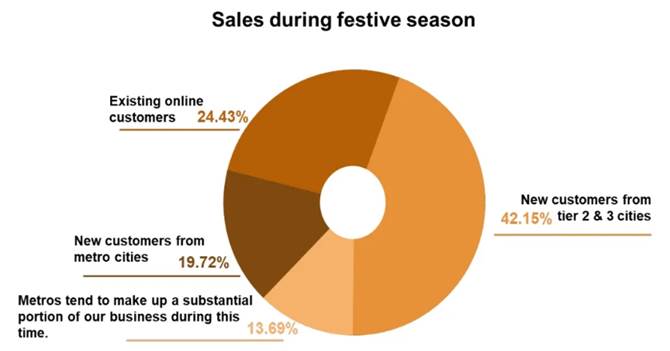
The
majority of respondents that is 42.15% identified new customers from Tier 2 and
Tier 3 cities as the primary source of their festive season orders, which
underscores the expanding footprint of businesses into smaller urban centers
during festive periods, highlighting the growing interest and participation of
consumers in these areas in the online shopping experience. 24.43% of
respondents observed that the bulk of their festive season orders stemmed from
loyal existing online customers, showcasing the enduring impact of customer
retention efforts.
Moreover, 19.72% of respondents reported a significant contribution from new customers in metro cities, affirming the ongoing relevance of major urban centers in festive season sales. Only 13.69% of respondents expressed that metros tend to constitute a substantial portion of their business during the festive season.
Rising
disposable incomes owing to economic growth in smaller urban centers, has
created an aspirational consumer base of youth from Tier 2 & 3 cities. For
these youth, buying branded or trendy products online is seen as a reflection
of their modern outlook and a way of keeping up with their urban peers. Festive
occasions loosen budgets further for such purchases and the heavy discounts and
deals offered during festive sales provide further incentives for them to
indulge in online shopping. Emulating urban consumption habits also drives
small town youth who are more open to shopping online versus older consumers.
Overregulation of Online Retail Cited as Major Challenge
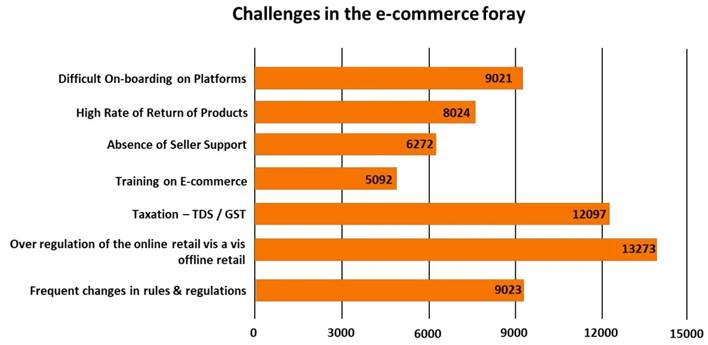
A
predominant challenge highlighted by a majority that is 13,273 respondents in
the e-commerce sector revolves around the issue of over-regulation in online
retail. This indicates perceived gaps in policy frameworks governing e-commerce
platforms versus brick-and-mortar stores, posing divergent compliance burdens
between online and offline sellers could disadvantage e- commerce businesses.
The overregulation of e-commerce compared to traditional retail creates an
unequal regulatory burden for online sellers. Additionally, 12,097 respondents
emphasized that taxation poses a significant hurdle for numerous e-commerce
sellers, citing the complex nature of tax norms for online selling.
Further
challenges identified by respondents include difficulties in onboarding
platforms, a high rate of product returns, absence of robust seller support,
training requirements, and the impact of frequent changes in rules and
regulations. These collective challenges underscore the multifaceted landscape
that businesses in the e-commerce domain navigate, necessitating a strategic
approach to address regulatory, tax, and operational complexities.
E-commerce Platforms
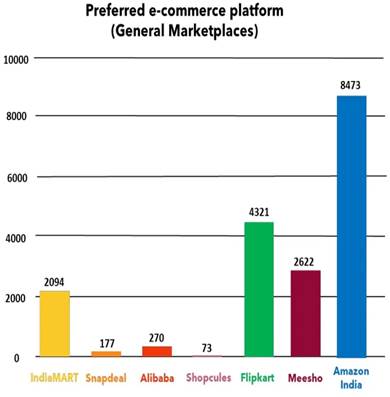
The
survey further reported the most favored platform preference of the respondents
in four different categories. From the available general marketplace of
e-commerce platforms, Amazon emerged as the most favored choice, followed by
Flipkart, Meesho, IndiaMart,
Alibaba, Snapdeal, and Shopclues. Amazon's prominence
in this category can be attributed to its extensive global reach, offering
sellers a multitude of benefits such as valuable insights, efficient inventory
facilities, a broad market reach, and robust marketing tools. These factors
collectively position Amazon as a highly favorable platform for sellers seeking
a versatile and impactful online marketplace.
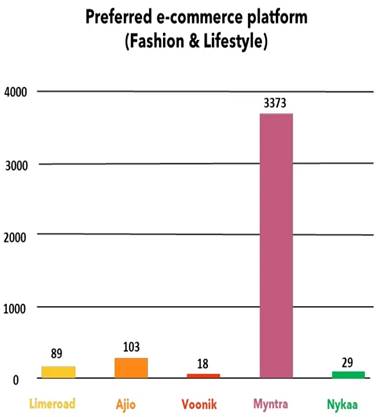
In
the realm of fashion and lifestyle e- commerce, Myntra emerged as the top
choice among respondents, followed by Ajio, Limeroad,
Nykaa, and Voonik. Myntra's
popularity in this category is attributed to its status as a major fashion and
lifestyle hub, offering a diverse range of products and brands. The platform's
extensive variety and brand offerings make it a preferred choice for sellers
operating in the fashion and lifestyle sector, seeking a prominent and
versatile platform to showcase and sell their products.
E-commerce Platforms
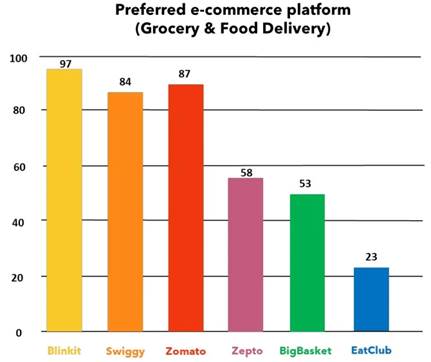 The notable trend in the
realm of grocery & food delivery services, Blinkit
emerged as the most favored platform,
surpassing competitors such as Swiggy, Zomato, Big Basket, Zepto,
and Eat Club. This preference for Blinkit is
attributed to its reputation for swift deliveries, particularly through
collaborations with local stores. Positioned as the largest e- grocery platform
in India, Blinkit has gained widespread popularity,
making it the preferred choice for fulfilling diverse grocery and household
requirements.
The notable trend in the
realm of grocery & food delivery services, Blinkit
emerged as the most favored platform,
surpassing competitors such as Swiggy, Zomato, Big Basket, Zepto,
and Eat Club. This preference for Blinkit is
attributed to its reputation for swift deliveries, particularly through
collaborations with local stores. Positioned as the largest e- grocery platform
in India, Blinkit has gained widespread popularity,
making it the preferred choice for fulfilling diverse grocery and household
requirements.
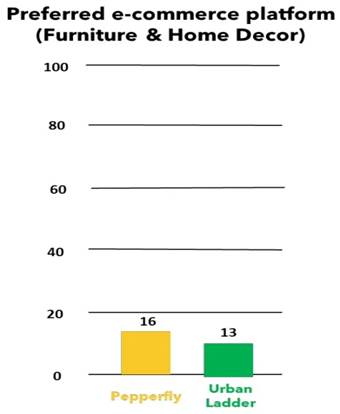
Pepperfry was identified as the preferred choice for
furniture and home decor, followed by Urban Ladder. Pepperfry
has solidified its position as the leading e- commerce platform for furniture,
making it a favorable and prominent choice for sellers operating in the
furniture and home decor industry.
D2C Model- Key for MSME Growth
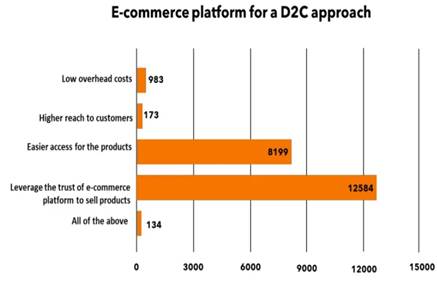 A predominant share of
survey respondents reported multiple factors contributing to the suitability of
e-commerce as a Direct-to- Consumer (D2C) approach. Key considerations include
leveraging the trust associated with e-commerce platforms for effective product
sales, streamlined access to products, and an extensive reach to potential
customers. D2C businesses express confidence in the reliability of e- commerce
channels, emphasizing the ease with which potential buyers can access their
15000 products and the broad customer reach facilitated by these platforms. In
contrast, a minority of 134 respondents favors the traditional offline
marketing approach.
A predominant share of
survey respondents reported multiple factors contributing to the suitability of
e-commerce as a Direct-to- Consumer (D2C) approach. Key considerations include
leveraging the trust associated with e-commerce platforms for effective product
sales, streamlined access to products, and an extensive reach to potential
customers. D2C businesses express confidence in the reliability of e- commerce
channels, emphasizing the ease with which potential buyers can access their
15000 products and the broad customer reach facilitated by these platforms. In
contrast, a minority of 134 respondents favors the traditional offline
marketing approach.
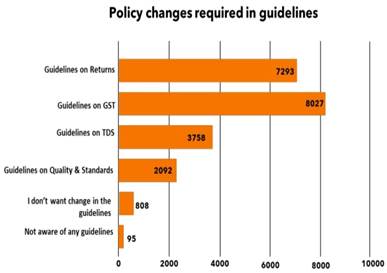 A sizeable
portion of respondents that is 8,027, highlighted the need for revisions in
guidelines pertaining to GST. This indicates that the current norms around
these aspects pose certain challenges. Under current GST norms, traditional
businesses with less than Rs. 40 lakh turmover are
exempt from obtaining GST registration. However, on e-commerce platforms, there
is no such exemption. Even sellers with very modest turnover are mandated to
have GST registration to enable inter-state sales.
A sizeable
portion of respondents that is 8,027, highlighted the need for revisions in
guidelines pertaining to GST. This indicates that the current norms around
these aspects pose certain challenges. Under current GST norms, traditional
businesses with less than Rs. 40 lakh turmover are
exempt from obtaining GST registration. However, on e-commerce platforms, there
is no such exemption. Even sellers with very modest turnover are mandated to
have GST registration to enable inter-state sales.
Moreover,
innovative promotion avenues through influencer marketing is a game changer for
D2C brands but despite all of this, Micro-entrepreneurs have to navigate
complex GST registration, filing processes diverting bandwidth from core
operations. Additionally, 7,293 respondents express the need for changes in
return guidelines, emphasizing the financial burden imposed by expensive retum processes. Streamlining return filing periodicity,
introducing automated reconciliations, and provisions for amendment can improve
compliance.
Another
concern highlighted by 3,758 respondents pertains to the complexity of Tax
Deducted at Source (TDS) guidelines, suggesting a desire for clarity and
simplification in this area due to need of rationalization to avoid unwarranted
tax burdens. Suitable changes in TDS applicability and payment can prevent
locked up capital for the sector. Moreover, 2,092 respondents have expressed
the need for changes in Guidelines on Quality & Standards. Clearer
guidelines on safety, reliability, and performance metrics tailored for
e-commerce would help ensure quality consistency, enable self-compliance, and
protect consumer interests. Updated standards would encourage voluntary
adherence and cultivate customer trust in the e-commerce ecosystem. Meanwhile,
a notable 808 respondents expressed contentment with the current guidelines and
prefer no changes. These insights shed light on the multifaceted challenges
businesses face.
Way
Forward
As
economies increasingly digitalize, MSMEs will need to adopt digital solutions
to compete and thrive. Enterprises that are not connected with e-commerce
platforms are likely to face greater difficulty in accessing markets at a time
when integrated enterprises are making deeper inroads into markets with the use
of platforms. Given that integrated firms perform better on average than
non-integrated enterprises, inequalities in market access caused by e-commerce
platforms can accentuate imbalances between these firms. The e-commerce
industry has emerged as a catalyst for the transformative growth of Micro,
Small, and Medium Enterprises (MSMEs) in India, fostering development through
funding, technology infusion, and targeted training initiatives. This positive
influence has not only empowered local businesses but has also triggered a
ripple effect in adjacent industries. As India's e-commerce sector propels
towards becoming the world's second-largest market by 2034 by overtaking the
United States, rapid expansions and technological innovations such as digital
payments, hyper- local logistics, analytics-driven customer engagement, and
digital advertising are anticipated to be pivotal contributors to its
burgeoning success*.
The
trajectory of the Indian e-retail business is marked by ambitious projections,
with expectations of engaging 300-350 million shoppers over the next five
years. The online Gross Merchandise Value (GMV) is poised to surge to US$
100-120 billion by 2025, according to a comprehensive report by the Indian
Brand Equity Foundation. Recognizing the potential embedded in this growth,
MSMEs are encouraged to leverage initiatives led by prominent platforms like
Amazon and Flipkart, strategically enrolling small sellers to bolster their
e-commerce presence. Governmental efforts to fortify the e-commerce landscape
for small businesses should be prioritized, particularly during festive
seasons, where these enterprises showcase their resilience and prosperity in
the online realm. However, challenges such as complex taxation policies,
intricate return procedures, delayed payments, and obscured fees on major
e-commerce platforms necessitate meticulous attention. Addressing these issues
through equitable contracting and robust dispute resolution mechanisms is
imperative for fostering a conducive environment. Simultaneously, enhancing
cyber security readiness is paramount to safeguard the interests of businesses
operating in the digital sphere. As India's SMEs demonstrate their prowess in
thriving during the festive season, the e-commerce wave presents a remarkable
opportunity for reaching new customers and steering post-pandemic growth.
Collaborations, supportive policies, and proactive preparedness will be
instrumental in harnessing the potential of e-commerce as a game- changer for
small and medium-sized businesses in India. Furthermore, the platform's
experiencing a surge in festive exports from India underscores the global
appeal of Indian products. Top export categories, including artificial jewelry,
cosmetics, grooming essentials, clothing, and accessories, exemplify the
diverse offerings driving demand in key markets such as the United States, the
United Kingdom, Germany, Australia, Canada, France, and the United Arab Emirates.
This international demand underlines the platform's role in connecting Indian
sellers with a global audience and contributing to the global prominence ofIndian goods during celebratory occasions.
*https://www.ibel.org/industry/ecommerce

India
SME Forum, the voice of MSMEs in India, has taken the lead in forming the Forum
for Internet Retailers, Sellers & Traders, (FIRST India) in order to
support the entry of retailers, sellers and traders who have been inducted in
the definition of micro, small and medium enterprises under the MSMED Act 2006
on the advice of the Advisory Committee constituted under subsection (2) of
section 7 of the MSMED Act 2006.
The
Indian retail, trade & commerce sector, representing enterprises based in
India, which are in the business of wholesale & retail selling of goods and
services, both, offline as well as online to consumers, are all eligible under
this change notified on 2nd July 2021.
India
SME Forum has pushed for the inclusion of wholesale and retail trade, as
activities eligible under the MSMED Act with benefits restricted to priority
sector lending, as of now.
Together
with Indian policymakers, FIRST India represents over 70,000 traders, merchants
and resellers and is committed to help create a conducive policy and ecosystem
which will help remove, the biggest obstacles for online merchants to expand
their business nationally as well as across-borders.
More
information on: www.1stindia.org


Delhi:
DD-30, Second Floor, Nehru
Enclave, Kalkaji, New Delhi-110019
Mumbai:
404, Durga Chambers, Veera Indl.
Estate, Veera Desai Andheri (w),
Mumbai- 400053,
India


